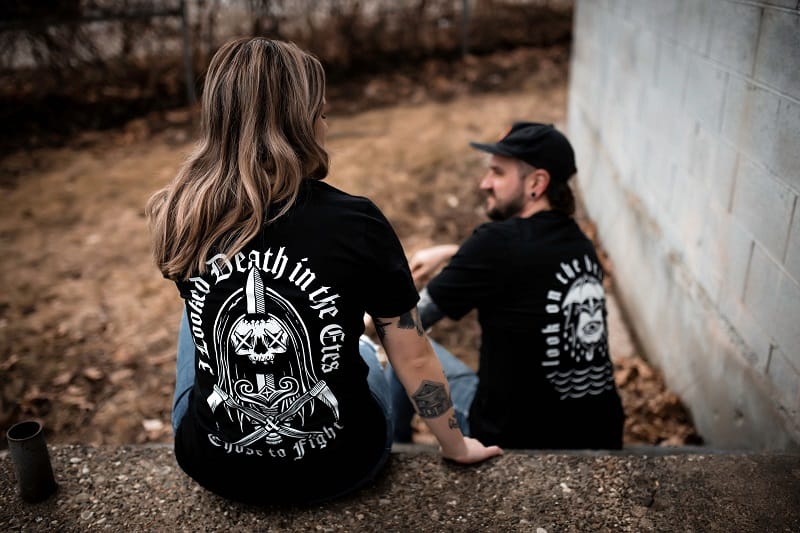
Tattoo artistry has broken out of the subculture margins to become the primary visual driver of contemporary street wear and high fashion. What once signaled rebellion on the skin is now weaponized by clothing designers to inject raw authenticity and graphic grit into seasonal collections. Consumers no longer view body art as separate from their wardrobe; they demand aesthetic continuity, with the illustrations on their clothes matching the permanent ink on their bodies. This cultural intersection has forced apparel brands to abandon generic typography and embrace the precise lineages of traditional, fine-line, and tribal tattooing to capture market attention.
Content
The Micro-Trend of Fine-Line and Cyber-Tribal Textures
As tattooing technology has advanced, the rise of delicate, single-needle fine-line work tattoo art tshirts and abstract cyber-tribalism has sparked a parallel movement in luxury and fast fashion. Fine-line tattooing relies on intricate geometry, botanical realism, and ethereal micro-lettering. Apparel designers replicate this aesthetic by moving away from heavy screen prints and turning toward delicate embroidery, laser engraving, and sublimation printing on sheer, form-fitting fabrics like mesh and second-skin synthetics.
Simultaneously, the resurgence of tribal tattooing, reimagined as futuristic cyber-tribalism, has reshaped the silhouettes of modern garments. These sharp, sweeping black curves and organic spikes are strategically placed along the anatomical lines of clothing, wrapping around sleeves, shoulders, and pant legs. This placement mimics how a tattoo artist flows a design along the natural contours of the human musculature. The result is clothing that accentuates the wearer’s shape, transforming basic active wear and avant-garde luxury garments into moving pieces of bodily art.
Single-Color Blackwork and the New Minimalist Gothic Aesthetic
The massive popularity of heavy blackwork tattooing, which utilizes solid blocks of pure black ink to create abstract shapes or dark imagery, has anchored a minimalist gothic aesthetic in modern fashion. This trend rejects vibrant color palettes in favor of stark contrast, using jet-black ink motifs printed on off-white, grey, or dark monochromatic fabrics. The imagery often draws from medieval woodcuts, dark surrealism, and esoteric symbolism, appealing to a consumer base that values mystery and alternative styling.
This crossover relies heavily on the concept of negative space, a fundamental technique in blackwork tattooing in which the bare skin serves as a highlight. In apparel design, this translates into using the fabric’s natural color to create the graphic’s highlights, surrounded by dense pools of black ink. This method creates a striking, brooding visual depth that standard textile patterns cannot match, allowing brands to deliver edgy, sophisticated collections that resonate with fans of heavy, dark-ink subcultures.
Merging Artist Collaborations with Luxury Houses
The ultimate validation of tattoo culture’s influence on fashion is the normalization of high-profile collaborations between elite ink artists and luxury fashion houses. Fashion directors are no longer merely copying tattoo aesthetics; they are hiring renowned tattooists to design capsule collections, walk runway shows, and illustrate fabric patterns. This cross-pollination elevates the status of the tattooist from an artisan to a fine artist, while giving luxury brands an instant injection of subcultural credibility.
These collaborations go beyond basic print placement, influencing the structural design and textile sourcing of the garments themselves. Designers develop leather jackets that are specially treated to resemble aged skin, allowing the printed tattoo graphics to appear embedded in the material rather than sitting on top of it. By treating clothing as a literal canvas for verified tattoo masters, the fashion industry has successfully blurred the line between wearable product and permanent artistic expression, changing how consumers define luxury.
Conclusion
Tattoo culture has become a permanent fixture in the fashion industry’s creative blueprint. By translating the distinct styles of bold traditional ink, intricate fine-line geometry, heavy blackwork, and anatomical cyber-tribalism onto fabric, apparel designers have tapped into a powerful reservoir of visual storytelling. This artistic convergence satisfies a deep consumer desire for clothing that feels personal, raw, and authentic. As the boundaries between body modification and wearable art continue to dissolve, the garment industry will rely even more heavily on the rich history and evolving techniques of tattoo artists to shape tomorrow’s visual trends. Clothing is no longer just a covering; it has become an outer layer of skin, reflecting the indelible marks of a global ink revolution.
Lucy is a fashion blogger with an interest in all things style-related. She loves trying out different styles and adapting them to her own life; she also likes to share what she’s learned along the way.